

Reformer Pilates Safety: Modifications for Common Injuries and Conditions
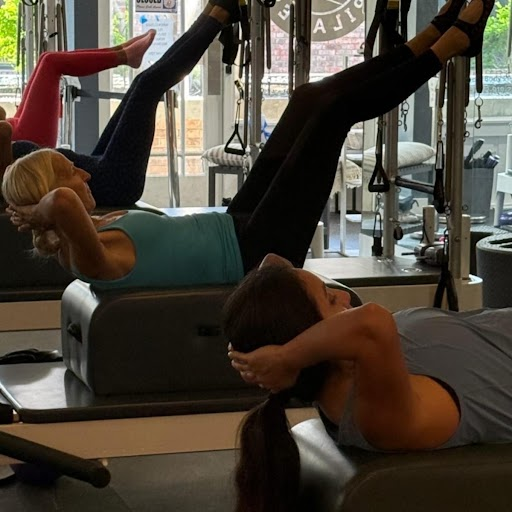
Pilates reformer classes can be modified for almost any physical condition, including neck issues, joint replacements, shoulder injuries, and scoliosis. The key is doctor clearance first, then specific adjustments to positioning, resistance, and range of motion. At Toned Body Pilates in Stuart, FL, every client starts with a private session so instructors can learn about these conditions before any group class begins.
A reformer is a versatile piece of equipment. Springs can be adjusted, straps can be shortened, and body position can shift from standing to kneeling to lying down. This flexibility is why Pilates works well for clients who need modifications, as long as the instructor knows the right adjustments to make. Below are modification guidelines for some of the most common conditions instructors encounter.
Do You Need Doctor Clearance Before Starting Pilates?
Yes, in most cases involving a recent surgery, joint replacement, or medical condition affecting balance or blood pressure, doctor clearance is required before starting Pilates. This applies to knee replacements, hip replacements, breast augmentation or other breast surgery, and any condition involving vertigo or blood pressure concerns. Clearance protects the client and gives the instructor a clear picture of any restrictions before movement begins.
This is also why all new clients complete a private orientation before joining a group class at our Stuart studio. That session is where orthopedic history, recent surgeries, and any medical conditions get reviewed, and where the modification plan for each person actually gets built.
Neck Issues, Vertigo, Blood Pressure, and Eye Pressure
These conditions often overlap because they all involve how the head and neck are positioned during class. Clients with a neck issue, vertigo, blood pressure concerns, eye pressure conditions, or kyphosis (a hunched upper back) need specific head and neck support throughout the workout.
Modifications for these conditions:
Ensure the client has doctor clearance to do Pilates.
Have the headrest lifted to support the neck.
When performing supine arms with lifting, keep the toes resting on the footbar. If neck strain persists with toes on the footbar, do not lift the head, just move the legs and arms.
If necessary (usually for kyphosis), add an additional small wedge or a pregnancy wedge under the head.
Encourage the client to relax the shoulders down and back, to help prevent neck strain and create better ability to access the core abdominal muscles.
Limit the amount of time spent in the supine position.
Knee Replacement, Knee Injury, or Knee Pain
Clients with a knee replacement or existing knee pain can still build significant strength on the reformer once a few key modifications are in place. Spring resistance can be adjusted to a level that challenges the muscle without stressing the joint.
Modifications for these conditions:
Ensure the client has doctor clearance to do Pilates.
Perform movements to isolate and strengthen the quadricep muscles, such as leg extension with the hip circle (with or without ankle weights) and standing carriage press.
Monitor the alignment of the ankle, knee, and pelvic bone. If the knee is rolling inward, place a palm on the inside of the knee to help the client maintain alignment during movements.
Put a squishy ball between the knees to help maintain proper alignment.
Instead of kneeling positions on the reformer, perform movements sitting on a box or directly on the reformer.
Place a cushioned rubber mat under the shins in kneeling position to prevent the kneecaps from pressing into the reformer mat.
Apply kinesiology tape in a criss-cross pattern to help support the knee.
Hip Replacement or Hip Pain
Hip replacement recovery follows a specific timeline, and reformer modifications need to respect that timeline closely.
Modifications for these conditions:
Ensure the client has doctor clearance to do Pilates.
Provide a cushion or rubber mat when lying on the side.
Reduce ranges of motion, as tolerated.
Adhere to strict hip replacement protocols for the first 12 weeks post hip replacement, then gradually add increased ranges of motion.
Use single leg movements to help strengthen the hip adductors, such as standing with the stationary leg on an elevated platform and performing lateral movements (open and close) with the moving leg, small circles, and lifting the moving leg's knee to hip height.
The 12-week window reflects standard post-surgical healing timelines, though clients should always confirm their specific timeline with their surgeon.
Rotator Cuff Tears and Frozen Shoulder
A torn rotator cuff or frozen shoulder does not mean sitting out of Pilates class entirely. It means the shoulder needs a different approach, built around reduced resistance and manual support from the instructor.
Modifications for these conditions:
Add manual assistance, as needed, to help the client perform the movement and reduce any resistance being used.
Offer the client the option of eliminating resistance and performing movements without it.
Reduce ranges of motion.
Perform movements to help strengthen the rotator cuff, such as bent elbow by side rotations open in all three hand positions: palm up, palm facing in, palm facing up.
Apply kinesiology tape to the shoulder to help it feel better supported.
A shoulder injury is one of the conditions where in-person guidance during a private session matters most, since an instructor can feel where a client is compensating and adjust in real time.
Foot and Ankle Injuries
Stress fractures and ankle strains change how a client interacts with the reformer's footbar and straps, but they do not eliminate reformer work as an option.
Modifications for these conditions:
Ensure the client has doctor clearance to do Pilates.
Allow the client to wear thin-soled sneakers on the reformer for better support.
Apply kinesiology tape to the problem area for better support.
Recovering From Breast Augmentation or Other Breast Surgery
Breast surgery recovery generally requires a minimum of 12 weeks before doctor clearance for Pilates, though this varies by procedure and surgeon.
Modifications for these conditions:
Ensure the client has doctor clearance to do Pilates, usually a minimum of 12 weeks.
Reduce ranges of motion, gradually increasing as tolerated.
Reduce resistance, as needed, and gradually increase.
Position the client in ways that reduce the rope angle from the anchor point, to lessen pull on the chest area.
A recent surgery is not something an instructor can identify just by watching someone move. It has to be communicated up front so the class can be modified correctly from the very first exercise, which is exactly what the private orientation session is for.
Scoliosis and Leg Length Differences
Scoliosis often comes with a leg length difference, which can make certain reformer exercises feel uneven without the right adjustment.
Modification for this condition:
Shorten one of the ropes attached to the loops, to allow the client to press with equal pressure into both loops.
This kind of adjustment is possible because reformer springs, ropes, and straps are all adjustable, which means the equipment can be fine-tuned to match the client rather than asking the client to adjust to a one-size-fits-all setup.
Why a Private Session Matters Before Group Classes

Every new client at Toned Body Pilates starts with a private session, and conditions like the ones covered in this post are exactly why. A group class moves at a set pace, and an instructor leading several people at once cannot always catch every alignment issue or review every client's medical history in real time. The private session solves that problem before it becomes one.
During that first private appointment, orthopedic and medical history get reviewed, the equipment gets introduced, and a modification plan specific to that person gets built. From there, group classes become a place where the client can move confidently, knowing their instructor already understands what they need. This reflects the studio's mission of providing challenging Pilates classes while keeping safety as the top priority.
Frequently Asked Questions
Do I need to tell my Pilates instructor about my medical conditions?
Yes, every client should share their full orthopedic and medical history before starting reformer classes. This information is what allows an instructor to build the right modifications from day one. Conditions that seem minor, like a mild knee ache or occasional dizziness, can change how certain exercises should be performed.
Can I still get a good workout with a joint replacement or injury?
Yes, reformer Pilates is well suited to clients with joint replacements or injuries because the equipment allows precise control over resistance and range of motion. Instructors can isolate specific muscle groups, like the quadriceps after a knee replacement, without stressing the joint itself. Many clients find that a modified reformer routine actually helps with recovery and long-term joint stability.
What if my condition is not listed here?
Every condition should still start with a conversation with the instructor and, when appropriate, a doctor. The examples in this post cover common conditions, but modifications can be built for nearly any physical limitation once the instructor understands the specifics. A private session is the right place to discuss anything not covered above.
Is kinesiology tape necessary for these modifications?
No, kinesiology tape is not required, but it can add extra support and comfort for certain conditions like knee issues, shoulder injuries, and foot or ankle strains. It is one tool among several, and instructors will recommend it when it fits the situation rather than applying it automatically.
How soon after surgery can I return to Pilates?
Timelines vary by procedure. Breast surgery generally requires a minimum of 12 weeks before clearance, and hip replacements follow strict precautions for the first 12 weeks before range of motion increases. Every timeline should be confirmed with the surgeon or doctor handling the specific case, since individual healing rates differ.
Bringing It All Together
Safe modifications are not a workaround to real Pilates, they are part of what makes reformer Pilates effective for such a wide range of bodies and conditions. From neck support and knee alignment to shoulder protection and post-surgical recovery, small adjustments to positioning, resistance, and range of motion allow clients to keep building strength no matter what they are working through. Doctor clearance always comes first, and clear communication with an instructor makes everything after that possible.
At Toned Body Pilates, we built our studio around this exact idea, that challenging Pilates and careful safety go hand in hand. Every new client in our Stuart and Sewall's Point community begins with a private session so we can learn about any conditions or history before stepping into a group class. From there, our group reformer classes are taught with attention to each person's ability level, so the workout stays both safe and genuinely challenging. If you have a condition you would like to discuss before your first class, you can find scheduling details on our FAQ and policies page, or contact the studio to book your private session.


Comments